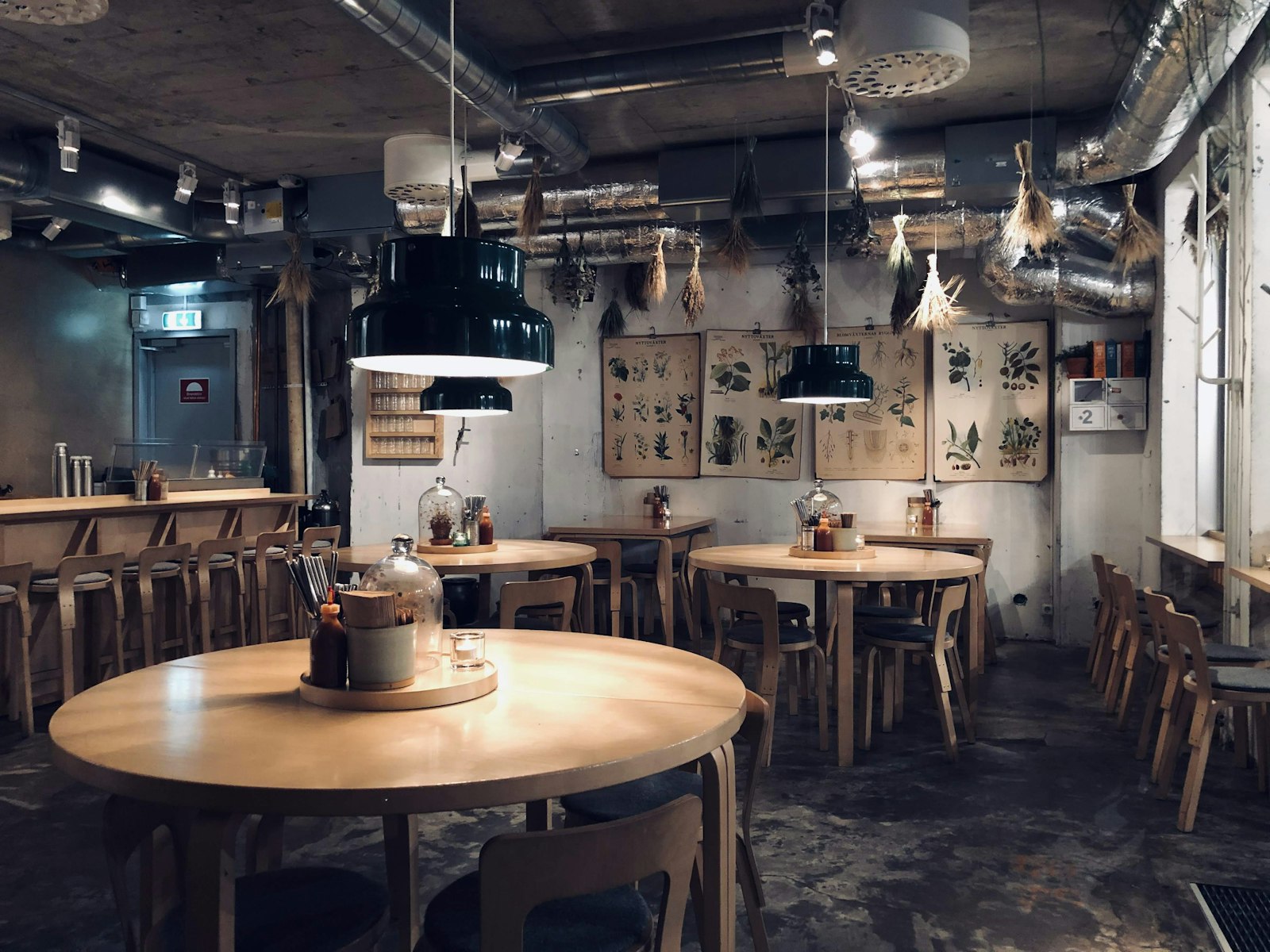
I have worked the bar here since 2019, which means I have watched several thousand people try to get a day’s work done over a flat white. Most of them manage it. A few have a miserable time, and almost always for the same avoidable reasons: they picked the wrong two hours, they sat in the wrong seat, or they came expecting a cafe to be an office and were quietly disappointed that it was a cafe.
So this is the guide I would give a friend. It is specific to ConnectionCafe.com because that is the room I know, but most of it travels to any decent independent in Shoreditch.
The deal, in both directions
There is an unwritten contract here and it genuinely does run both ways. Cafes that pretend otherwise end up with either an empty room or a room full of people nursing one filter coffee for six hours, and neither pays the staff.
What we owe you:
- A table you will not be moved off. We have no time limit, and we will not come and hover.
- Power that works. Sixty-two seats, sockets at roughly two-thirds of them, and we will tell you which.
- Wi-Fi that is genuinely fast rather than technically present — 500 Mbps across the whole building.
- A loo, kept clean, that you do not have to ask for a key to use.
- Somebody behind the bar who will answer a question without making you feel stupid.
What you owe us:
- Order something roughly once an hour. Not a rule, just the arithmetic of a small business. A filter refill is £1.20 before 10am and nobody will ever count.
- Free the four-tops at 12:30. Lunch is our one genuinely tight hour. If you are one person on a table for four at half past twelve, you will feel the room’s opinion before anyone says anything.
- Headphones for calls, and never on speaker. This is the single thing that turns a good room bad.
- Tip the staff who let you stay all afternoon. They are the reason you can.
None of that is onerous. It is roughly how you would behave in someone’s kitchen.
When to come
This matters more than anything else in this article. The same room is a library at 8:15 and a bus station at 12:45.
| Window | What it is like | Best for |
|---|---|---|
| 7:00 – 9:30 | Quiet, mostly takeaway, the roaster off | Deep focus, writing, anything that needs silence |
| 9:30 – 11:30 | Filling up, steady hum, machine running | Email, admin, shallow work |
| 11:30 – 14:00 | Lunch. Loud. Every table wanted | Honestly: not working. Come for the food |
| 14:00 – 16:30 | The second quiet window, best light | Long stretches, reading, calls with headphones |
| 16:30 – close | Winding down, warmer, lower lighting | Editing, planning, the last hour of a bad day |
Tuesday mornings are the exception to all of this. The roaster runs from six and the basement extractor hums through the floor until about eleven. Some people find it the best white noise in London and come specifically for it. Others find it maddening. You will know within ten minutes which one you are — and if it is the second, our roasting day piece explains what is going on down there.
Sunday afternoons are the quietest hours of the week by a distance.
Where to sit
Not all sixty-two seats are equal, and the difference is bigger than people expect.
- The bench along the left wall — power under every second seat, the warmest corner, and your back to the room. The best working seats we have.
- The two-tops by the front window — excellent light until about three, no power, and you will be looked at by everyone walking past on Kiln Street. Fine for an hour, tiring for four.
- The communal table in the middle — power in the centre channel, but it is also where the room is loudest and where strangers will talk to you. Some people want exactly that.
- The back room — quietest, no natural light, and we hold it for group bookings most Sunday evenings and Monday mornings, so ask before you settle in.
If you are going to be here a while, ask whoever is on bar. We know which sockets are temperamental and we would rather tell you before you unpack.
What a cafe is actually good for
I think people oversell this. A cafe is very good at some kinds of work and genuinely bad at others, and pretending otherwise is how you end up frustrated.
Good: drafting and writing, email and admin, reading, sketching, anything where a low hum helps you stop overthinking. The mild social pressure of being visible is a real productivity tool — most people find it much harder to scroll aimlessly in public.
Bad: long video calls, anything confidential, work that needs two screens, and deep technical focus during the lunch rush. If your afternoon is four back-to-back calls, a cafe is the wrong room and no amount of etiquette will fix it. That is one of the reasons we ended up with eight rooms upstairs — a door that shuts, a desk, and the same coffee two floors down.
The caffeine trap
This is the part people get wrong most often, and I say it as someone who sells coffee for a living.
If you drink three double-shot flat whites between nine and noon because you are on a roll, you will not be on a roll at two. You will be jittery, slightly anxious, and convinced the problem is the work. Caffeine has a half-life of around five hours in most people, so a lunchtime double is still meaningfully in your system at bedtime.
What actually works, in my experience of watching this play out daily:
- One properly good coffee in the morning rather than three rushed ones. Our house blend, Kiln Street No. 4, is built to be drunk slowly.
- Switch to batch filter after about 11. It is longer, gentler and you can nurse it.
- Switch again after two — decaf is not a moral failure, and ours is a washed Colombian that we roast on the same drum as everything else.
- Drink water. We keep jugs on the end of the bar and nobody has ever had to ask.
The Food Standards Agency has sensible general guidance on caffeine if you want something more official than a bar lead’s opinion, particularly if you are pregnant or managing blood pressure.
A short word on the neighbourhood
Shoreditch has more laptop-friendly cafes per square mile than almost anywhere in Britain, and I am not going to pretend we are the only good one. What I would say is: find one and become a regular at it. The difference between being a customer and being a regular is enormous — it is the difference between a table and your table, between a flat white and “the usual”, between somewhere you work and somewhere you belong.
If you are coming to us, we are six minutes’ walk from Shoreditch High Street and ten from Liverpool Street; Transport for London will sort the rest out. Come before 9:30 on your first visit, take the left-hand bench, and say hello.
Before you pack your laptop
Check what the kitchen is doing before you commit to a long session — plates run until an hour before close and the all-day menu is what makes a five-hour stay survivable. If you would rather not think about any of it, book a table and we will keep one of the good seats for you.