Our coffee
ConnectionCafe.com coffee: bought carefully, roasted downstairs, poured upstairs
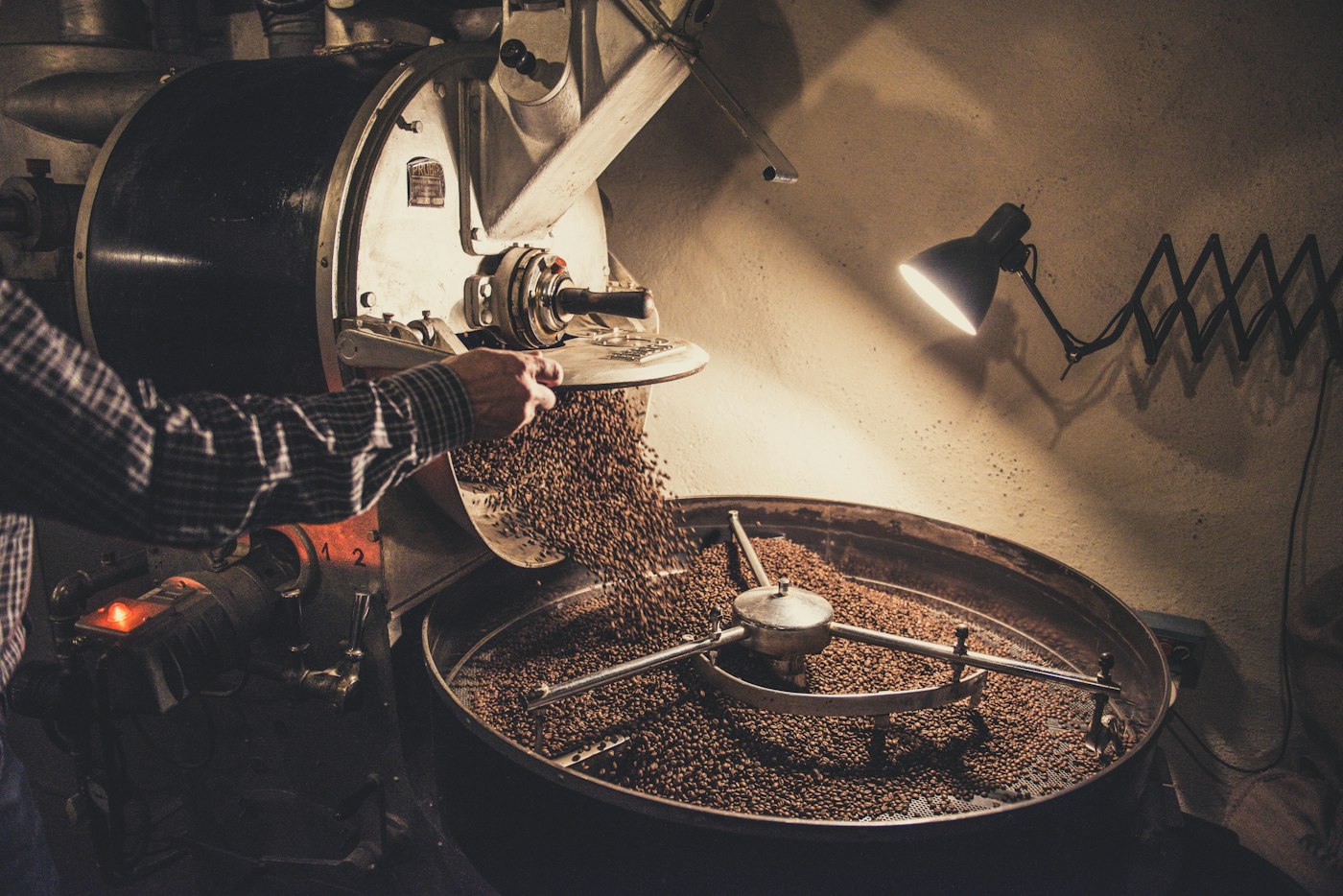
Everything in a ConnectionCafe.com cup passes through one 5kg drum roaster in our basement on a Tuesday morning. Here is where it comes from, how we roast it, and how to get the same cup at home.
The short version
Small roastery, short supply chain, no secrets
We roast about 12kg a week. That is a rounding error to a commercial roastery and exactly the point: it is little enough that one person can taste every batch before it goes anywhere near a customer.
Roasting your own coffee is not automatically better. Done badly it is worse than buying well from someone who knows what they are doing. What it does give us is the ability to answer questions honestly. We can tell you which farm or co-operative a coffee came from, what it cost per kilo, which Tuesday it was roasted, how long it rested and what we changed about the recipe this morning. Most of that is written on a card on the bar anyway.
The rest of this page is the long version — the blend, the roast, the sourcing, the water, and a home brew recipe you can actually follow. If you would rather just drink something, the espresso and filter menu is two clicks away and the filter list changes every fortnight.
The house blend
Kiln Street No. 4, and why it is 70/30
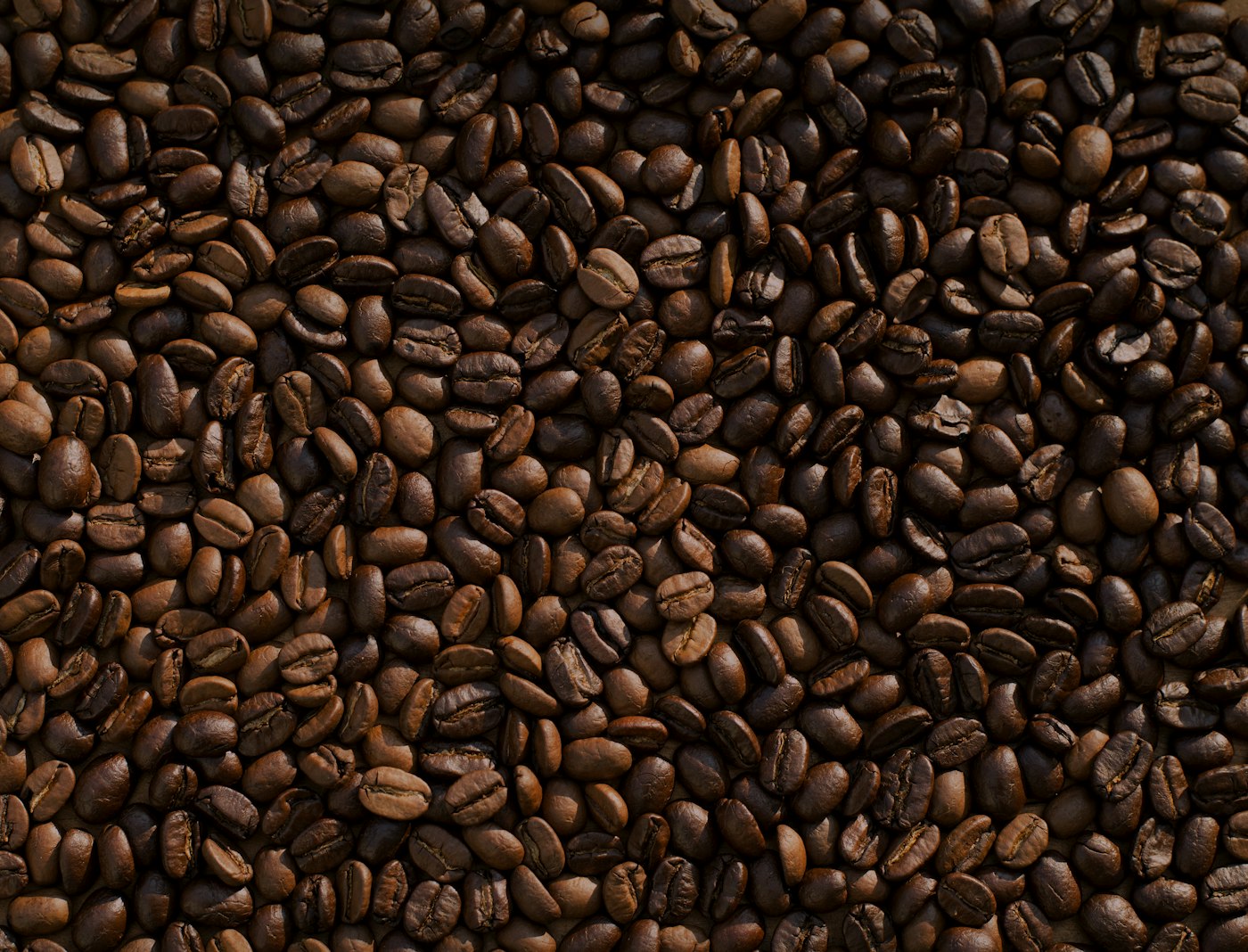
Kiln Street No. 4 is the fourth recipe we wrote for this room and the only one that still tasted right at half past eight on a Monday with a queue at the door. Seventy per cent is a washed Brazil from the Cerrado — dense, sweet, low in acid, the structural beam of the blend. The other thirty is a washed Ethiopian lot that supplies everything the Brazil cannot: aromatics, a bit of citric brightness, the smell that makes people look up.
We have tried the obvious variations. At 60/40 the blend is lovely as black espresso and falls apart in a flat white — the Ethiopian acidity clashes with milk sugars and the whole thing turns thin and faintly savoury. At 80/20 it is comfortable and slightly dull. Seventy-thirty is the point where it survives a splash of milk without becoming a hot brown drink.
- Black: cocoa, toasted hazelnut, a lift of red apple through the middle
- In milk: milk chocolate and demerara, with a baked-apple finish that lingers
- Body heavy enough to hold its own in a 12oz latte, which is where most of it ends up
- Recipe on bar: 18g in, 36g out, 28 seconds, 93°C brew temperature
That 18/36/28 recipe is a starting point, not scripture. It is re-dialled at open and again mid-afternoon, because the same beans behave differently on day five and day ten off roast.
On filter
Two rotating single origins, changed every fortnight
Espresso wants consistency; filter is where we get to be curious. Two single origins run side by side on the brew bar at any time, chosen so they are genuinely different from one another — usually something floral and delicate next to something sweeter and heavier, so there is a real decision to make at the counter rather than two versions of the same cup.
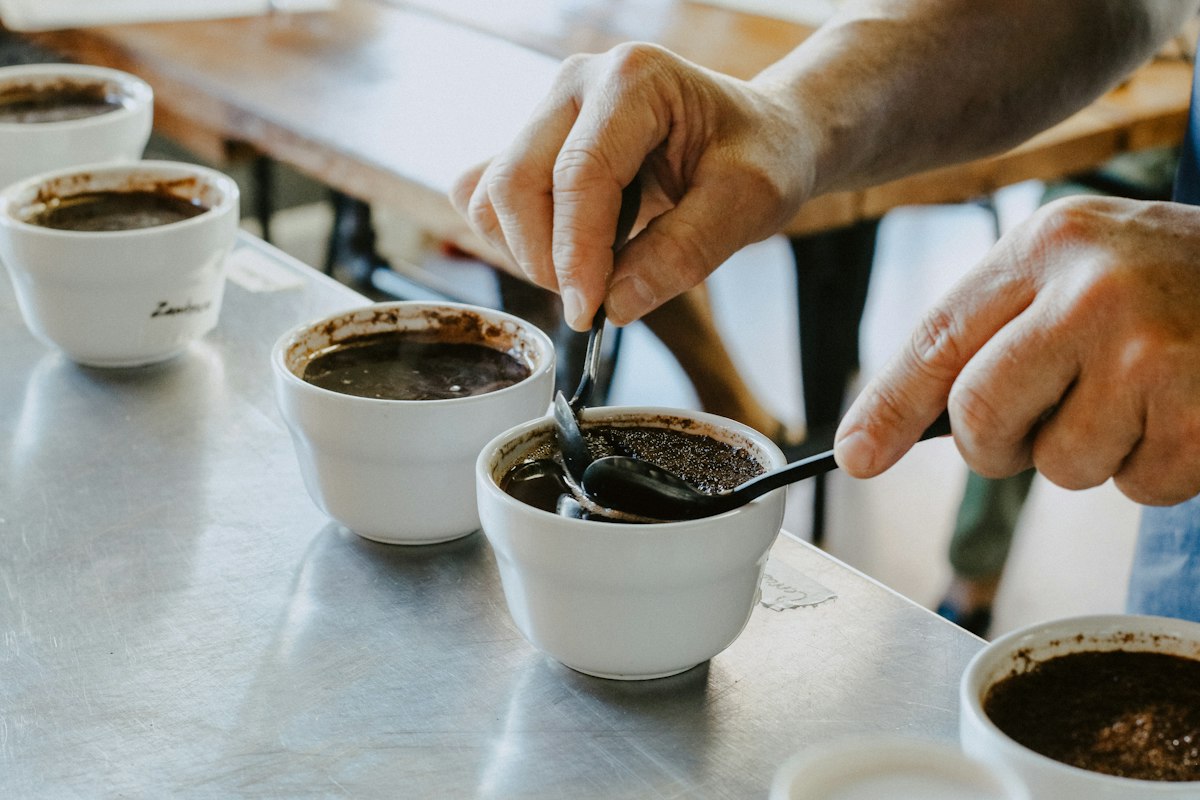
Choosing them is unglamorous. Importers send samples, we roast them on a small sample profile, and we cup them blind on a Tuesday afternoon with the scoresheet face down. A coffee has to clear three bars: does it score well, does it still taste good after twenty minutes in a cup at room temperature, and would we be happy handing it to someone at eight in the morning who has thirty seconds to spare. Plenty of high-scoring coffees fail the third test.
Every filter coffee comes with a tasting card on the bar: origin, producer or co-operative, altitude, process, roast date, the recipe we brew it at, and three flavour notes we agreed on when we cupped it. Three, not fifteen. If we cannot find the flavour in the cup ourselves, it does not go on the card.
See what is on filter nowRoasting day
What actually happens on a Tuesday
Tuesday became roasting day in 2016 for a dull reason — it was the only morning nobody was needed behind the bar — and it stuck. Here is the shape of one, from a cold drum to sealed bins.
-
05:50
Greens weighed, drum warming
Batches are weighed out the night before so the morning is only about heat. The drum runs empty for the best part of an hour until the metal is properly soaked through at around 190°C — a roaster that is hot on the gauge but cold in the steel will stall the first batch every time.
-
06:30
The calibration batch
The first batch of the day is always the same Brazil, roasted to the same curve as last Tuesday. It is not there to be sold. It tells us whether the machine is behaving before we commit anything expensive to it.
-
07:10
Drying, then Maillard
Four kilos of green go in. The temperature drops, turns around near the 1:40 mark, then climbs steadily. The first stretch dries the bean out; after that the sugars and amino acids start doing the work that eventually tastes like cocoa and toasted nuts.
-
07:19
First crack
Somewhere between nine and ten minutes in, the beans audibly crack as steam escapes. From that moment every decision is measured in seconds. We give Kiln Street No. 4 between 1:15 and 1:45 of development after first crack — long enough for sweetness, short enough to keep the fruit.
-
07:21
Drop and cool
Out into the cooling tray, stirred by hand, down to room temperature inside four minutes. Coffee left to cool slowly keeps roasting itself. Every batch is logged: charge temperature, turning point, first crack, drop, weight loss.
-
11:00
Into the degassing bins
Fresh coffee is full of carbon dioxide and tastes harsh and fizzy under pressure. It rests in sealed bins with one-way valves for four to seven days before it reaches a grinder — and it comes off the bar twelve days after roasting, whatever is left in the hopper.
We do not roast dark. A very dark roast is often a way of hiding a defect — an underripe cherry, a badly dried lot — under smoke and caramelisation. Roasting lighter leaves us nowhere to hide, which is precisely why we do it. You can read more about how the roastery came to exist at all on our about page, or follow the batch notes in the ConnectionCafe.com journal.
Sourcing & ethics
What we can prove, and what we will not claim
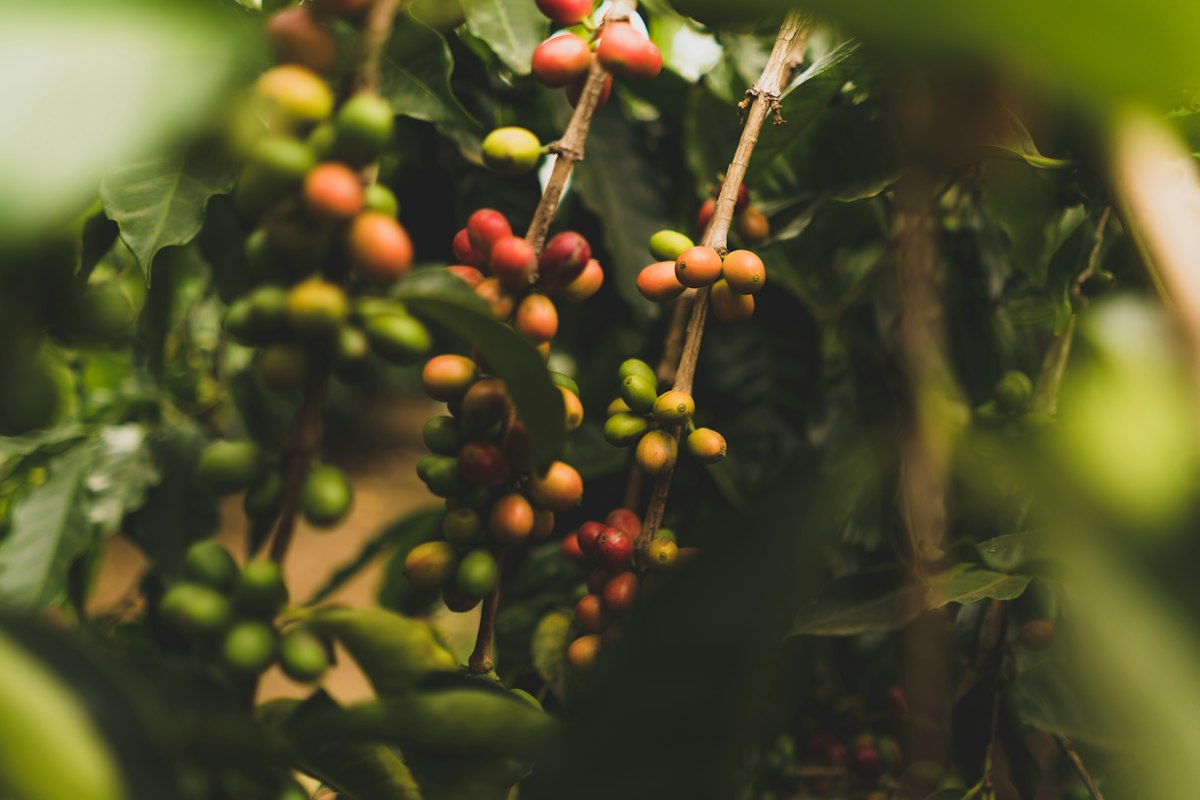
We buy green coffee through a small number of importers who publish what they pay growers — not a vague commitment to fairness, but a figure per kilo, per lot, that we can show you if you ask. Where a coffee carries a certification we say so, and we buy Fairtrade-certified lots when they are the best coffee on the table rather than as a badge. Every delivery is cupped before it goes on the menu, and a lot that does not taste like its sample gets sent back. It has happened three times.
What we will not tell you is that we are a direct trade roastery. Direct trade means flying to origin, negotiating with producers yourself and returning season after season. We roast twelve kilos a week. We have never negotiated a contract at a farm gate and it would be dishonest to imply otherwise, however well it would read on a bag.
The same honesty applies behind the bar. Our baristas train to Specialty Coffee Association standards and are paid above the real Living Wage, because the difference between a good coffee programme and a great one is almost always how long the same people have been working the same machine.
The unglamorous half
Water, grinders and the things nobody photographs
A perfectly sourced, perfectly roasted coffee can still be ruined by hard water or a blunt set of burrs. These three things decide more of the cup than the machine on the counter does.
-
Water, which is 98% of the cup
London water is hard enough to fur a kettle in a fortnight and it flattens coffee long before it damages a boiler. Ours runs through a filter and is blended back to roughly 80 ppm total hardness with about 40 ppm alkalinity — soft enough to let acidity through, buffered enough to stop the espresso tasting sharp. Cartridges are changed on a litre count, not a hunch.
-
Two grinders, one job each
A flat-burr grinder is dedicated to the house blend and never touched for anything else, because purging a grinder between coffees wastes both. A second grinder handles the rotating single origins for filter. Burrs are inspected roughly every 600kg and replaced before anyone can taste that they are dull.
-
Recalibrated twice a day
Coffee keeps degassing after it is roasted, so a recipe dialled in on Thursday is wrong by Saturday. We re-dial at open and again mid-afternoon, weigh every shot in and out, and adjust when the weather swings — humidity changes how ground coffee packs in the basket more than most people expect.
Brew it at home
Our V60 recipe for Kiln Street No. 4
This is the recipe we teach new baristas and the one we hand out at the counter. It makes one generous mug and it is forgiving enough to survive a kitchen scale and a stove-top kettle.
Two rules matter more than the numbers. Weigh the coffee and the water rather than guessing, and grind immediately before brewing. Pre-ground coffee loses most of its aromatics within about fifteen minutes, which is why we would rather sell you whole beans — though we will happily grind to order if you tell us how you brew.
Buying beans at the counter? Bags are 250g with the roast date printed on the label, and they keep best sealed in a cupboard — never the fridge, where they absorb every smell in it. Use them within three to four weeks of that date. Guests staying in one of our rooms above the cafe get a bag of the current house roast included in the rate.
V60, one mug
- Dose15g
- Water250g at 94°C
- Ratio1:16.6
- GrindMedium-fine, like table salt
- Total time2:45 – 3:15
-
Rinse the paper filter with hot water and tip the rinse water away. This washes off the paper taste and warms the cone.
-
Grind 15g of coffee to a medium-fine texture — closer to table salt than caster sugar. Grind it immediately before brewing, not the night before.
-
Start the timer and pour 50g of water at 94°C. Swirl gently so every ground is wet, then leave it to bloom for 45 seconds.
-
Pour in slow circles up to 150g by 1:15, keeping the bed level and avoiding the paper.
-
Pour again up to 250g total by 1:45, then give the cone one gentle swirl to settle the bed flat.
-
The drawdown should finish between 2:45 and 3:15. Too slow and bitter — grind coarser. Too fast and sour — grind finer. Change one thing at a time.
Saturdays at nine
Come and taste it with us — it costs nothing
Every Saturday at 9am we set up a cupping table with whatever is new: green samples we are considering, the week's roast, sometimes a batch that went wrong so we can work out why together. We break the crust, slurp loudly, disagree about whether it tastes of plum or blackcurrant, and finish inside forty minutes.
It is free, no experience is expected, and there is nothing to buy at the end of it. Guests staying upstairs are automatically on the list; everyone else is welcome to turn up, though a message first helps us grind enough.
Ask the roaster
Coffee questions we get asked at the bar
Five things people want to know about our coffee, answered the way we would answer them standing at the counter.
What coffee do you serve as standard at ConnectionCafe.com?
Every espresso-based drink on the bar is built on Kiln Street No. 4, our house blend of 70% washed Brazil and 30% washed Ethiopia, roasted downstairs on a 5kg drum. The standard recipe is 18g of coffee in, 36g of espresso out, in about 28 seconds at 93°C. Alongside it we keep two rotating single origins on filter and an 18-hour cold brew on tap.
How fresh is the coffee, and how do you know?
We roast every Tuesday and log every batch, so we can tell you the exact roast date of whatever is in your cup. Coffee rests for four to seven days after roasting before it reaches a grinder, and nothing older than twelve days off roast stays on the bar. Retail bags carry the roast date printed on the label rather than a vague best-before.
How often do the single origins on filter change?
Every fortnight. Two single origins run at a time so there is usually something bright next to something sweeter, and each one arrives with a tasting card on the bar showing the origin, producer or co-operative, altitude, process, roast date and the three flavour notes we agreed on when we cupped it. When a coffee runs out early, the card goes in the bin and a new one goes up the same morning.
Can I buy beans to take home, and will you grind them?
Yes. We sell the house blend and whatever single origins are on at the time in 250g bags, whole bean by default. Tell us how you brew — espresso, V60, AeroPress, cafetiere or moka pot — and we will grind to order at the counter. Whole bean keeps better, so if you have a grinder at home we would rather you used it. Guests staying upstairs get a 250g bag of the current house roast included in the room rate.
Is the Saturday cupping really free, and can anyone come?
It is free and it is open to anyone, guests and locals alike. We set up a cupping table at 9am every Saturday with whatever is new, taste it properly and out loud, and talk through what we are noticing. It lasts about forty minutes, you do not need any experience, and there is no sales pitch at the end. Message us beforehand if you are bringing a group so we can grind enough.
Taste the difference
Come and drink it within twelve days of the roast
The espresso bar is open from 7am on weekdays and 8am at weekends, the filter changes every fortnight, and there is a 250g bag of Kiln Street No. 4 waiting for anyone staying upstairs.