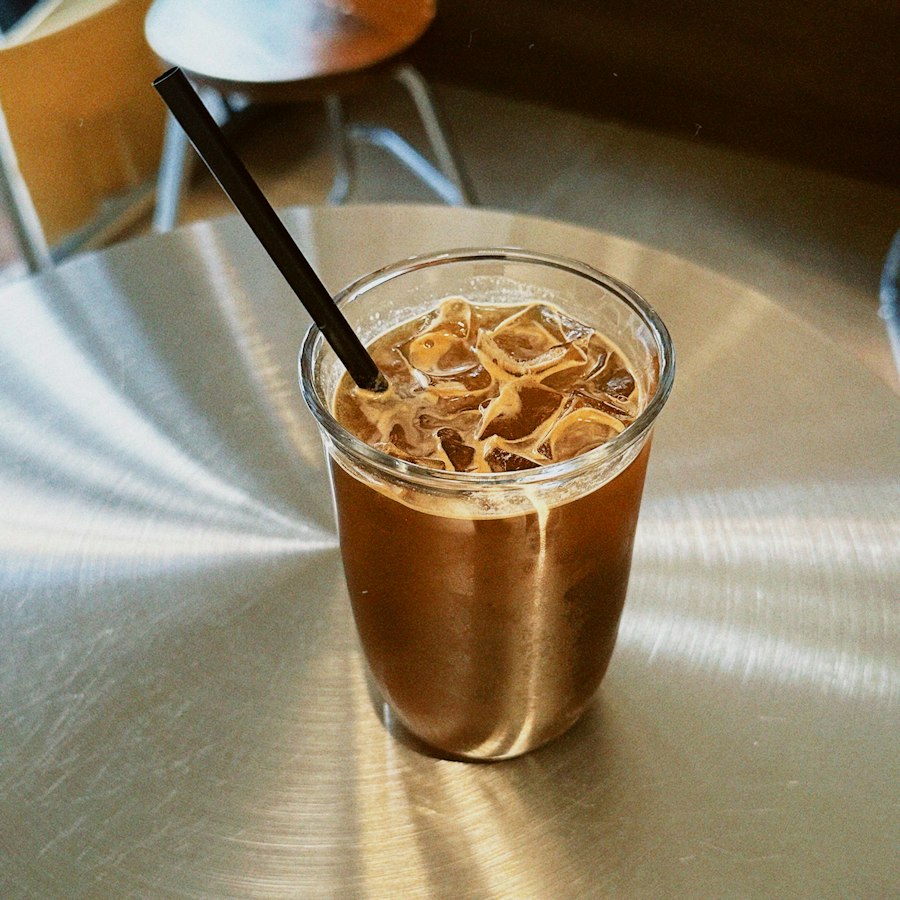
Every hot week in August, somebody at the counter asks for “an iced coffee” and points at the cold brew tap. We pour it, because it is delicious and because arguing with a thirsty person in a heatwave is bad manners. But they are not the same drink, and the difference is not marketing. It happens in the water, and it is worth understanding, because once you know which one you actually like you will never order the wrong glass again.
Here is what changes, in plain terms, with the numbers we work to downstairs.
The only difference that matters: temperature
Strip everything else away and it comes down to one variable.
Iced coffee is brewed hot and then made cold. Either it is brewed normally and chilled afterwards, or, better, it is brewed directly onto ice so that it chills the instant it leaves the bed of coffee. Hot water goes through the grounds either way.
Cold brew never meets heat at all. We steep coarse grounds in room-temperature water for 18 hours, then filter the lot out. Nothing is ever warmed.
That sounds like a small thing. It is not, because hot water and cold water do not dissolve the same compounds at the same rate.
What the water is actually pulling out
Coffee is roughly 30% water-soluble by weight, and we only ever want to remove about a fifth of it. The order in which those solubles leave the grounds is not random:
- Acids and aromatics go first. These are the bright, fruity, floral, tea-like notes, and they are the fastest and most temperature-sensitive things in the cup.
- Sugars and caramelised compounds follow. Sweetness, body, the round part.
- Bitter compounds come last, which is why over-brewed coffee tastes harsh rather than merely strong.
Hot water is an aggressive solvent. It grabs all three groups in about four minutes. Cold water is a lazy one. Over 18 hours it will comfortably extract the sugars and the heavier body, but a great many of the delicate acids and volatile aromatics either extract poorly or never become airborne enough for your nose to register them.
That is the whole story. Cold brew reads sweeter, rounder, heavier and lower in perceived acidity, with chocolate, malt and nut notes to the front. Flash-chilled iced coffee keeps the acidity and the aromatics intact, so it tastes brighter, cleaner and far more like the farm it came from. Neither is objectively better. They are different tools.
The three cold coffees, side by side
| Hot-brewed then chilled | Japanese flash-chill | Cold brew | |
|---|---|---|---|
| Water temperature | 93C | 93C | Room temperature |
| Contact time | 3 to 4 min | 3 to 4 min | 18 hours |
| Aromatics | Mostly lost | Fully preserved | Muted |
| Acidity | Dull, sometimes sour | Bright and clean | Very low |
| Body | Thin | Medium, crisp | Heavy, syrupy |
| Perceived sweetness | Low | Medium | High |
| Best coffee for it | Anything, honestly | Washed, fruit-forward | Chocolatey, denser roasts |
| Keeps for | Hours | Hours | Days, refrigerated |
The middle column is the one most people have never tried. Japanese-style iced coffee means brewing a pour-over at full strength onto a pre-weighed bed of ice, so roughly a third of your brew water is ice sitting in the server. The coffee is chilled within seconds of extraction, which locks the aromatics in before they can evaporate. It is the most exciting cold coffee in the world and it lasts about twenty minutes before it starts to fade, which is exactly why you rarely see it pre-bottled.
The left-hand column, brewed hot and left to cool in a jug, is the one we would gently steer you away from. Coffee held warm for hours goes flat and papery, and chilling it afterwards does not bring anything back.
Caffeine, honestly
This is where most articles start lying to you, so let us be precise.
Cold brew concentrate is usually stronger by volume than a cup of filter, because we brew it at a far higher coffee-to-water ratio. That is the only reason. It is not a magic property of cold water; a long cold steep is actually a slightly less efficient way of extracting caffeine per gram of coffee than hot brewing is.
What lands in your glass depends entirely on dilution:
- Undiluted concentrate, brewed at 1:8, can carry roughly three times the caffeine of the same volume of batch filter. Nobody should drink it neat, and we do not serve it that way.
- Served as we pour it, diluted and on tap, a cold brew sits in broadly the same territory as a large mug of filter.
- An iced latte contains one double shot, around 120 to 140mg, however tall the glass is. The ice and the milk change the volume, not the dose.
So if a bottled cold brew claims to have twice the caffeine of anything, check the dilution on the back of the label before you believe it, and be careful with concentrate at home. The size of the glass tells you nothing at all.
How we make ours
Cold brew is not the lazy option, whatever you have been told. It ties up a lot of coffee for a long time and gives you exactly one chance to get it right.
We use the house blend, Kiln Street No. 4, 70% washed Brazil and 30% Ethiopia, rested a few days past Tuesday roast day so the gas has settled. It is ground very coarse, close to raw sugar. Then:
- 18 hours, room temperature, in the basement. Not the fridge. Cold-room steeping slows extraction so much that you have to push the time out past 24 hours to get any sweetness at all, and the result is thinner for it.
- One gentle stir at the start to wet every particle, then we leave it completely alone. Agitating it later drags out bitterness.
- Filtered once through mesh, then once through paper. The paper pass is what takes it from muddy to clean, and it is the step most people skip.
- Kegged on site and nitrogen-poured, which is what gives it the soft cascade and the faintly creamy finish without a drop of dairy in it.
It goes on tap and it sells out in summer. You will find it on the filter and cold brew section of our menu, alongside the two single origins that rotate every fortnight and a proper iced latte built on the same double shot as everything else on the bar.
Making cold brew at home, properly
You need a jug, a sieve, a paper filter and a night’s patience. This is our house ratio scaled down.
For about 900ml of concentrate:
- 125g of coffee, ground coarse
- 1 litre of filtered water at room temperature
- 18 hours on the worktop, covered, out of direct sun
- Strain through a fine sieve, then pass that liquid through a paper filter or clean muslin
- Dilute to taste, starting at 1 part concentrate to 1.5 parts water or milk
Things that genuinely matter, in order:
- Grind coarse. Too fine and the long steep turns astringent, and the filtering becomes a twenty-minute misery.
- Weigh it. Cold brew is unforgiving of guesswork, because you cannot taste and adjust halfway through the way you can with a pour-over.
- Keep it to 18 hours, not 24 or 36. Past about twenty hours you gain very little extra sweetness and start picking up woody, papery notes.
- Store the concentrate sealed in the fridge and drink it within a week. Diluted, it is at its best inside two or three days. It is a low-acid, water-based product, so treat it with the same care you would any other fresh food; the Food Standards Agency guidance on chilled storage is the sensible baseline.
Which coffees suit which method
Do not waste a delicate, high-grown washed Ethiopian on cold brew. Everything you paid for in that coffee, the jasmine, the bergamot, the acidity, is precisely what an 18-hour cold steep flattens. Save it for a V60, or for flash-chilled iced coffee, where it sings.
Cold brew rewards the opposite profile: denser, chocolatey, nutty coffees, naturals and pulped naturals, and blends with a solid Brazilian backbone. That is exactly why we use the house blend for it, and it is the same logic behind the way the SCA teaches brewing, which is to match the method to the bean rather than treat extraction as one universal problem with one correct answer.
If you want the difference in a single sitting, order a cold brew and an iced filter of that fortnight’s single origin at the same time and taste them alternately. Two minutes and you will never confuse the two again.
Come and taste them against each other
We pour cold brew on tap all year round, the rotating single origins change every fortnight, and if you ask nicely on a quiet afternoon we will flash-chill a V60 over ice for you so you can taste what the middle column of that table actually does. The full filter list is here, the story of the blend and the basement roaster is on our coffee page, and our guide to how to order coffee like a regular covers the hot side of the bar in the same amount of detail.
Guests staying in the rooms upstairs get the 9am Saturday cupping free, which is the fastest way we know to train a palate on acidity. Everything else we have written is on the journal.