Somebody asked me last Tuesday, over the noise of the roaster, whether we were ever going to “move past blends”. They meant it kindly. They had read that single origin is the serious choice and a blend is what you sell when you have something to hide. I have heard some version of that perhaps a hundred times since 2016, and it is worth taking apart properly, because the truth is more interesting than the slogan.
Single origin is not a quality grade. It is a description of where a coffee came from, at a resolution nobody has ever agreed on. A blend is not a compromise. It is a decision about what a cup has to survive. Here is how we think about both, with our own house blend as the worked example.
“Single origin” is a category, not a quality score
The phrase promises traceability, and sometimes it delivers a great deal of it. But the label on its own does not tell you how far down the chain anyone actually looked. In practice it gets used at four wildly different levels of precision.
The four things the label can mean
- A country. “Single origin Colombia” can mean coffee from thousands of smallholders across several departments, bulked together and sold on a commodity grade. It is a single origin in roughly the way that “British cheese” is a single cheese.
- A region. Yirgacheffe, Huila, Antigua. Much more useful, because a region shares an altitude band, a climate and usually a processing tradition. You can start to predict what the cup will do.
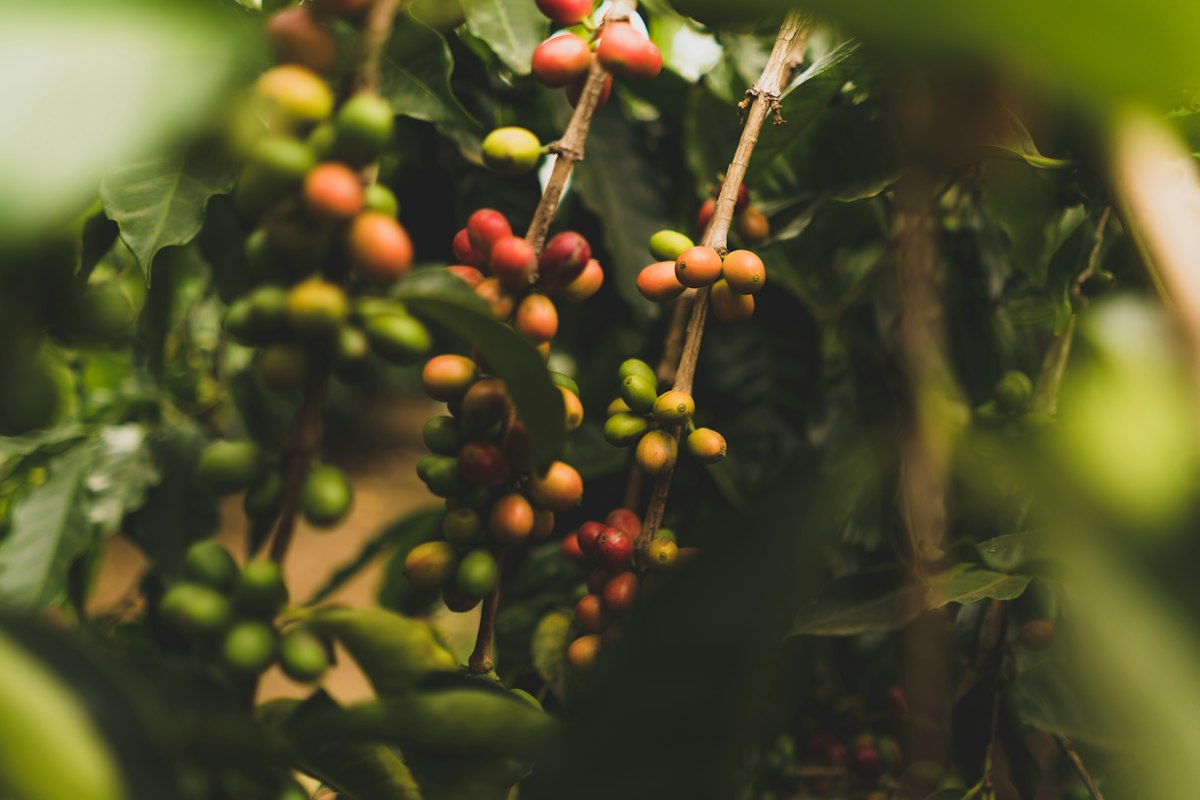
- A co-operative or washing station. Now you are down to a few hundred producers delivering cherry to one place, processed by one team to one standard. This is where a great deal of the genuinely excellent coffee in the world sits, and where premiums have a real chance of reaching farmers.
- A single lot from a single farm, sometimes one varietal picked across a few days. Total traceability, tiny volumes, high prices, and no guarantee whatsoever that it tastes better than the co-operative lot sitting next to it.
All four get called single origin. Only the last two tell you much. So when a bag says nothing beyond a country name, that is not a code for quality; it is an absence of information, and it is fair to read it that way.
What a blend is actually for
A blend exists to solve three problems a single lot cannot solve on its own.
Consistency across a year. Coffee is agricultural. A Brazilian harvest lands mid-year, an Ethiopian one later, and every lot is finite. If we hung our espresso on one farm’s coffee, the flat white you loved in March would be a noticeably different drink by September, and then it would simply stop existing. Blending lets us swap a component while holding the profile still, so your regular order tastes like your regular order.
Balance in milk. This is the big one, and I will come back to it.
A price that does not lurch. Green coffee prices move, and single lots are the most volatile end of that market. A blend built around a stable, well-contracted base lets us pay properly for every component and still keep espresso on the menu at a price that is not rewritten three times a year. Our baristas are paid above the real Living Wage, and that only works if the drinks economics are predictable.
| Single origin | Blend | |
|---|---|---|
| Main purpose | Show one place clearly | Build a specific, repeatable cup |
| Availability | Finite, seasonal | Held stable year-round |
| Best served as | Filter, black | Espresso, and anything with milk |
| Character | Distinctive, sometimes lopsided | Balanced by design |
| Risk | Can vanish under milk | Can taste anonymous if built lazily |
| How we use it | Two rotating lots, changed fortnightly | Kiln Street No. 4, all day, every day |
The honest failure mode of a blend is not dishonesty, it is laziness: a wall of generic dark-roasted filler assembled to hit a price. That is a real thing and it has earned its bad reputation. But it is an argument against bad blending, not against blending.
Kiln Street No. 4: why 70/30
Our house blend is 70% washed Brazil and 30% Ethiopia. We roast it downstairs on a 5kg drum roaster every Tuesday, around 12kg a week, and nothing goes on the bar older than twelve days off roast. The ratio took us the better part of a year to settle and we have not wanted to move it since.
The Brazil is the architecture. Washed Brazilian coffee at this grade gives us weight in the mouth, low acidity and a deep cocoa-and-hazelnut sweetness that behaves predictably under pressure. It is forgiving of a grind that has drifted slightly coarse on a busy Saturday. On its own, though, it is quiet. Lovely, but it does not make you look up from your book.
The Ethiopia is the lift. Thirty per cent is enough to put stone fruit and a floral top note over that cocoa base, and to give a long black the brightness that keeps it from reading flat. Any more and the balance tips; at 40% we found the espresso turned sharp and hollow in the finish, and the milk drinks lost their body.
Why it holds up under 150ml of steamed milk
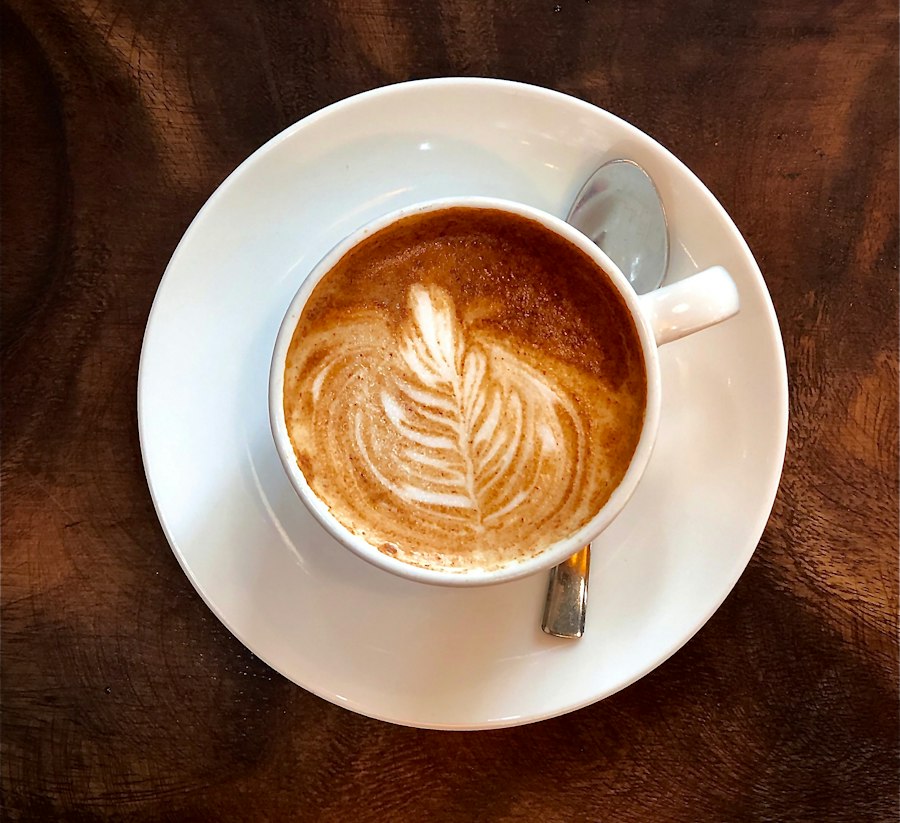
Here is the physical reality of the thing. A flat white is roughly a double shot against 150ml of steamed milk. Milk brings fat, protein and lactose sweetness, and all three mask delicate aromatics and round off high acidity. Whatever survives that has to be structural: body, sugar-browning sweetness, cocoa, nuts, caramel.
A beautiful washed Ethiopian, the sort of coffee we would happily pay a lot for and put on filter, is built almost entirely out of the things milk erases. Jasmine, bergamot, that tea-like delicacy. Pour 150ml of steamed milk over it and you get an expensive cup of faintly sour warm milk. I have made that mistake commercially and I do not plan to repeat it.
So Kiln Street No. 4 is designed backwards from the flat white. The Brazil is chosen precisely because it is loud in the frequencies milk does not cover, and the Ethiopia is dosed at the exact point where it still cuts through. You can taste the logic for yourself on the espresso and milk drinks part of our menu.
Where single origin genuinely wins
Filter. Without question, and without the argument.
Black coffee, brewed at around 60g per litre, has nothing to hide behind. No milk, no sugar, not even crema texture doing half the work. Every acid, every aromatic and every flaw in the drying is on display. That is exactly the right stage for one lot from one place, and it is why we keep two rotating single origins on filter and change them every fortnight rather than trying to hold one forever.
It is also why the two halves of our bar are sourced differently. The blend components are contracted for stability and repeatability. The filter lots are bought because somebody on the team tasted something on a sample roast and could not stop thinking about it. Whatever is on this fortnight sits under filter and cold brew, and the longer story of how we buy and roast is on our coffee page.
How to read a bag label
Whether you are buying from us or from anyone else, four pieces of information matter more than the tasting notes printed on the front.
- Roast date, not best before. A “best before” twelve months out tells you nothing at all. A roast date tells you almost everything. For filter, seven to twenty-one days off roast is the honest window; for espresso, give it at least five days to let the gas settle. A bag with no roast date anywhere on it is one I would put back down.
- Process. Washed means the fruit was stripped before drying: cleaner, brighter, more acidic. Natural means dried in the cherry: heavier, fruitier, occasionally boozy. Honey or pulped natural sits between the two. This one word predicts more about the cup than the country name does.
- Altitude. Around 1,500 metres and above usually means slower-ripening cherry, denser beans and more acidity. It is a proxy rather than a promise, but it is a good one.
- Varietal. Bourbon, Caturra, Gesha, Heirloom. Mostly this tells you about aromatic potential, and it is the one place where “Heirloom” on an Ethiopian bag is an honest shrug rather than a dodge, because the genetic diversity there is genuinely uncatalogued.
Price and certification sit alongside all of this rather than replacing it. Schemes such as Fairtrade set a floor that matters enormously at commodity level; for the lots we buy, what we would rather talk about is the relationship and the premium paid above that floor. And if you want the sensory vocabulary formalised, the SCA publishes the framework our baristas train against.
What a good tasting card should tell you
A card that says “notes of chocolate and nuts” has told you nothing you could not have guessed from the colour of the bean. A useful one gives you producer or co-operative, region and altitude, process, varietal, roast date, and three flavour notes specific enough to be falsifiable. If we write “red apple, demerara, black tea” and you taste grapefruit, one of us is wrong, and we would genuinely like to know which.
Taste them against each other
The quickest way to settle this argument is to stop reading about it. Order a flat white on the house blend and a filter of whichever single origin is on that fortnight, and drink them alternately, black one, milky one, back again. You will hear immediately why one is built for milk and the other would be ruined by it. Ask whoever is on bar and they will talk you through the card.
If you want to go further, the free guest cupping at 9am on Saturdays is open to anyone staying in the rooms upstairs, and every room leaves with a 250g bag of the house roast, a hand grinder and a brewer. Our piece on cold brew versus iced coffee applies the same match-the-bean-to-the-method logic to the cold side of the bar, and everything else we have written lives on the journal.